Commercial plumbing doesn’t forgive guesswork. The systems are larger, the stakes are higher, and the margin for error shrinks when every fixture sits on a schedule and a budget. Training a team to handle the tools and tech of commercial plumbing isn’t about memorizing product names. It’s about building judgment, repeatable habits, and a shared language around safety, measurement, diagnostics, and documentation. The right approach turns a crew into a force multiplier: one person can set up a job, another can diagnose, a third can close out the punch list, and the quality stays consistent.
I’ve hired apprentices straight from trade school who could thread pipe all day, and I’ve seen veteran plumbers get tripped up by a new crimp system or an updated building automation dashboard. What works is a structured path that blends hands-on practice, scenario-based learning, and tech literacy. This is how I would build a program for training your team on commercial plumbing tools and tech, with the realities of job sites, inspectors, and clients in mind.
What makes commercial different
Commercial plumbing is a different animal. You’re dealing with banks of water heaters, circulation loops, higher pressure zones, trench drains, grease interceptors, backflow devices, booster pumps, and building management systems that want data, not hunches. The mix of materials complicates matters. Copper and press fittings in one wing, CPVC in ceiling voids, stainless or black iron for gas, PEX with expansion rings in a tenant fit‑out, cast iron for DWV with no‑hub couplings, solvent welds where allowed by code. Each combination changes your tool set and your procedure.
On a multi‑story job you also have staging challenges: moving heavy tools safely, keeping torches where ventilation allows, and coordinating with other trades whose schedule conflicts with yours. Training has to reflect those realities. Teach the mechanics of a press tool, yes, but also how to read the room when framing crews are slicing open your pipe chases.
Building a tool literacy baseline
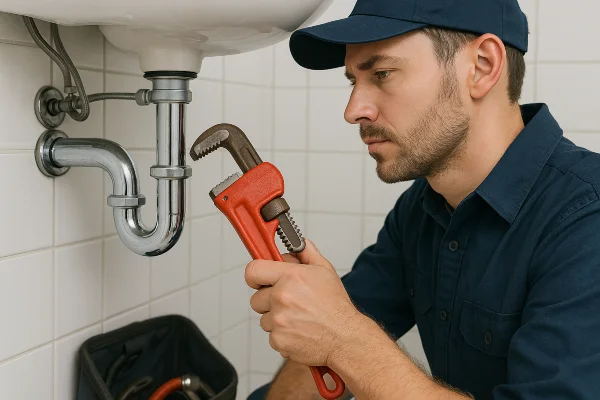
I start every onboarding cycle with a baseline assessment. Put wrenches, threaders, press tools, inspection cameras, manometers, and a thermal imager on a table. Ask each tech to show how they’d set up and verify safe operation. You’ll learn in fifteen minutes who has habits and who has gaps.
For hand tools, focus on sizing, condition, and torque awareness. A 24‑inch pipe wrench can ruin a brass valve if someone treats it like a breaker bar. For powered tools, include battery safety and storage, not just operation. Most plumbing tools today run on cordless platforms. Batteries are the hidden failure point when crews treat them like consumables. I want techs to understand charge cycles, heat management, and the difference between high‑output packs and compact packs when running a press tool on 2‑inch copper.
Material‑specific tools deserve blocks of time. A practical example: new hires often misuse ratcheting cutters on PEX and create out‑of‑square cuts, which then compromise expansion rings. Have them cut fifty times, inspect each cut under light, and measure failures. Once they see how Plumber tiny imperfections become leaks at 150 psi test pressure, their standards rise.
Press, groove, and thread: choosing the right method
Commercial projects mix joining systems for speed, code compliance, and serviceability. Teach the decision tree, not just the motions.
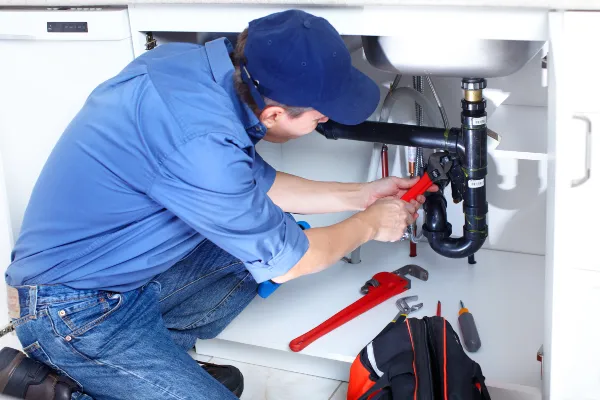
Press systems. They are fast and reduce hot work risks. Training must include jaw selection, gasket inspection, and calibration checks. Show what happens when a jaw is slightly out of spec: an oval press on a 1‑inch fitting might pass a quick test, then seep under thermal cycling. I keep a bag of intentionally damaged fittings to press and cut open so techs can see the consequences. Also cover labeling and traceability, since many spec writers require recording press tool serial numbers and crimp counts for QC.
Grooved systems. Grooved couplings shine on large diameter piping and equipment connections where disassembly matters. The groove depth and alignment are the game. Spend time on the roll groover setup, including wall thickness checks. I’ve watched experienced plumbers over‑groove thin‑wall pipe and then chase leaks for days. Build a habit of using groove gauges and logging settings for each lot of pipe.
Threaded systems. Still common for gas and small bore where press is not permitted or not economical. Training must include oiling technique, die wear, and thread engagement checks with gauges. Poorly cut threads lose you hours on a punch list when a bank of valves drips after building heat-up. Teach dope and tape chemistry too. Some sealants react with certain plastics and elastomers. Require technicians to carry and consult compatibility charts rather than guessing.
Measurement and verification as a culture
Commercial clients judge you by the data you produce. Pressure test logs, temperature readings across mixing valves, flow rates at balancing valves, and insulation thickness documentation all matter. Equip your plumbers with reliable gauges, digital manometers, pitot tubes or ultrasonic flow meters when appropriate, and simple data sheets that remove ambiguity.
I train crews to treat measurement like plumbing. Anyone who touches a system must record what they see, with timestamp and instrument ID. It adds minutes, but it avoids arguments months later. Tie this to tool training: a manometer reading is only as good as the tech using it. Practice zeroing, leak checking hoses, and recognizing oscillations that indicate a trapped column of water mocking the sensor. On hydronic systems, we role‑play a scenario where a balancing valve shows target differential pressure but thermostatic radiator valves keep hunting. Then we use temperature clamps and an infrared thermometer to reveal air in the loop. This kind of integrated training builds instincts.
Safety and hot work, embedded not bolted on
Safety training that lives in a binder gets ignored. Fold it into tool training. If someone is learning to braze, they should also learn the site’s hot work permit process, fire watch rules, and the acceptable distance from combustibles. The best brazing technique won’t save you from a policy violation. Use the right PPE as part of the ritual: gloves that allow dexterity for press tools, hearing protection for hammer drilling, and respirators when cutting cast iron or using solvent cements in poor ventilation.
Confined spaces and trench work come up less in interiors but often in retrofits and utility tie‑ins. Tapping into an existing line in a crawl space teaches humility. Build a drill that includes atmospheric testing with a calibrated meter, ventilation setup, and rescue planning alongside the cutting and fastening. Pair apprentices with a foreman who narrates decisions in real time rather than barking orders.
Diagnostics with cameras and locators
Camera work separates residential habits from commercial capability. On a small drain you can get away with pushing a camera to a blockage and calling for a jetter. In a grocery or hospital, you need a map, a depth, and proof that you understand the building’s drain geometry. Train on camera heads with proper centering and lens cleaning protocol, and on locators that read sondes, not just metal tracing.
We run drills where a crew must map a 4‑inch sanitary line with three tie‑ins, label them on a marked plan, and log distances and depths every 10 feet. Accuracy within 5 feet on distance and 6 inches on depth is a reasonable standard. Teach restraint with jetters too. A 4,000 psi bypass nozzle in a corroded cast iron stack is a lawsuit waiting to happen. Show how to start with lower pressure, softer nozzles, and verify pipe condition by camera before escalating.
Water quality and backflow, not afterthoughts
Backflow devices and water quality programs are compliance heavy. Your team needs a working knowledge of check valve function, relief valve triggers, and how debris in the line mimics failure. Require hands‑on rebuilds of common devices on the bench, then step through test kit procedures until every tech can produce a clean report. Log calibration dates for test kits and bake that into your training schedule.
For water quality, training should cover flushing protocols, disinfectant residual testing, and Legionella risk management in large hot water systems. Teach crews why a 1 to 2 feet per second flow velocity target during flushes avoids dislodging scale that damages downstream fixtures. Explain how sensor‑based mixing valves interact with recirculation and what temperature data trends indicate a failed check in a return loop.
Pumps, controls, and the slow dance with automation
Commercial plumbing increasingly ties into building automation. Domestic booster pumps run on VFDs, mixing stations expose BACnet points, and sump systems alarm to the cloud. You don’t need your plumbers to become controls engineers, but they must read a VFD screen, interpret a pressure setpoint, and know when a PID loop is hunting.
I train on three layers. First, mechanical: alignment, coupling checks, seal inspection, isolation valves, check valves, and throttling best practices. Second, electrical and controls at a practical level: lockout/tagout, reading basic wiring diagrams, confirming sensor orientation and scaling, and verifying hand‑off‑auto operation. Third, collaboration: how to document a change request to the controls contractor with clarity. “Raise the setpoint 10 psi” means little without context. “Domestic booster lag pump fails to start in auto at 60 psi setpoint, DP sensor reading 18 psi at header, suspect sensor scaling 0 to 200 psi rather than 0 to 100 psi” gets action.
Digital documentation and asset tagging
A commercial plumber who can’t document will get sidelined. Build standard operating procedures for photos, redlines, and asset tagging using QR codes or NFC tags. Train every tech to fill out closeout documentation: fixture counts, valve tags, serial numbers, backflow test certificates, and warranty starts. It is tedious, but it is billable and defensible.
On the tool side, track your own assets the same way. Press tools, calibration dates, camera heads, and test kit certifications should show up in a simple dashboard. I aim for a 90‑day look‑ahead on calibrations. Tie access to work assignment: you don’t dispatch a plumber to a backflow test without a kit inside its calibration window.
Apprenticeship that moves, not stalls
Skills in commercial plumbing compound when trainees rotate through stations. Set up repeatable stations in your shop and change the variables weekly. One week, press copper with tee‑pulls and slope measurements; next week, assemble grooved pipe with two change‑out scenarios; the following week, cut and join cast iron with both no‑hub and service weight lead and oakum for heritage buildings that still require it.
Integrate problem‑solving. Give apprentices mislabeled valves and ask them to trace and correct a P&ID section. Have them estimate materials from a marked‑up plan, then do a post‑mortem after the real job closes. Nothing builds commercial sense like seeing how a neat takeoff falls apart when the ceiling grid and fire sprinkler mains arrive before your crew.
Communication on multi‑trade sites
Training on plumbing tools and tech is incomplete if you ignore communication. Your team must speak to general contractors, inspectors, facilities managers, and other trades in language that’s precise and calm. Practice pull‑planning, daily huddles, and clear RFI writing. Teach people to flag a potential clash early, with a photo, a dimension, and a proposed fix. The difference between “pipe in the way” and “4‑inch storm main conflicts with cable tray at gridline C‑5, invert at 9 feet AFF, proposal: offset 45‑45 to clear by 6 inches” is the difference between frustration and respect.
Calibration, maintenance, and the quiet discipline
Tools drift. Jaws loosen. Batteries die in cold weather faster than on the bench. Build maintenance into your training. Press tools need regular checks according to manufacturer specs, typically every 20 to 40 thousand cycles or annually. Groovers need dies inspected for wear. Jetters demand nozzle cleaning and hose inspection before and after use. Threaders need oil that’s not contaminated with chips that score the threads.
Teach storage discipline on mobile carts or gang boxes. Label foam cutouts for critical tools. It sounds obsessive until you lose an inspection camera head on a Friday afternoon and spend three hours tearing the shop apart. We run a simple rule: if a tool saves you more than fifteen minutes on a job, it earns a labeled home. That consistency translates to predictability in the field.
Practical scenarios that build judgment
Scenario training sticks better than lectures. Here are two we use often:
- Pressure test with a leak that only appears at temperature. Set up a copper loop, press‑fit, then apply heat with lamps to bring the loop up 30 degrees. A slightly mis‑pressed fitting will start to weep. The lesson: cold tests aren’t enough for certain loops, and visual inspection matters as much as the gauge. Grease interceptor with baffled outlet and downstream gas buildup. Assemble a mock‑up with clear sections, flow dyed water, and introduce air pockets to show how gas locking mimics a clog. Train the steps: isolate, vent safely, verify atmospheric conditions, then clear. Crews stop guessing after they’ve seen the physics.
These scenarios build mental models. When a plumber later stands in a mechanical room with an intermittent domestic hot water complaint, they pull from pattern recognition rather than superstition.
Selecting and phasing in new technology
Vendors love demos. The trench is full of half‑adopted gadgets that no one uses after the first week. Create a tech adoption workflow that starts with a pain point, not a product. If torque spec compliance on no‑hub couplings is a recurring issue, trial a torque‑limiting wrench with two foremen for a month and compare rework rates. If leak detection on occupied floors concerns you, pilot acoustic sensors on two high‑risk risers, document false positives, and calculate response time.
Don’t let the loudest voice decide. Put a lead plumber, a foreman, and a project manager on the trial committee. Require short, honest reports: time saved, problems introduced, and changes needed to SOPs. Only then roll out training for the broader team. This makes the training relevant, not theoretical, and helps avoid tool bloat that weighs down your carts.
Code literacy, not code recitation
Commercial plumbing lives under a stack of codes and standards: IPC or UPC, local amendments, ASSE certifications for testers, energy codes for water heating, and sometimes healthcare guidelines that change the rules entirely. You don’t need every plumber to memorize chapter and verse, but you need them to recognize triggers. A hospital fixture might require a specific vacuum breaker. A lab building may push you into acid waste piping with neutralization tanks. A rooftop relief line might need freeze protection and a visible termination.
Training should include code reading workshops centered on common scopes. Hand people the relevant section, ask them to interpret, then compare to the local inspector’s published preferences. Where interpretation is gray, teach the habit of submitting RFIs early. The goal is code literacy: confidence to find and apply the rule, and humility to ask when uncertain.
The two checklists we actually use
On most projects, the right checklist can save a week of rework. When I limit lists, these two earn their place.
- Pre‑press checklist for copper and stainless: Verify pipe end is deburred and clean, inside and out, with no out‑of‑round. Confirm fitting and pipe material match and O‑ring is intact and lubricated if required. Validate press jaw size, tool calibration date, and battery at or above recommended level. Dry‑fit, mark insertion depth, and align to avoid side loading during the press. Record press count by section for QC log, then perform visual and hand tug check. Backflow test kit readiness: Check calibration date and function test with a known pressure source. Inspect hoses and valves for leaks, label ends for quick setup. Bring spare washers, filters, and a cleaning brush for fouled test cocks. Load printed test form or digital template with device details pre‑filled. Confirm site access and isolation valve status to avoid unexpected shutdowns.
These checklists are short on purpose. They target failure points we see repeatedly and tie back to tool competency.
Mentors, metrics, and morale
Tools and tech training can become a grind if you don’t build pride into it. Assign mentors who like to teach, not just the best mechanics. Pair an apprentice with a foreman who keeps a calm pace and treats mistakes as learning. Celebrate measured successes. When a crew drops leak call backs by half over a quarter or completes a complex camera and mapping task with zero rework, show the numbers.
Metrics must be fair. Track what the team can influence: test pass rates on first attempt, documentation completeness, calibration compliance, and incident‑free hot work permits. Avoid metrics that reward rushing. If you incentivize number of fittings pressed per hour, you’ll get speed and you’ll also get missed burrs and skewed press marks.
Tool carts and modularity on real sites
A commercial site punishes disorganization. Train teams to build modular carts that match the day’s scope. A riser rough‑in cart differs from a trim‑out cart. The riser cart carries press tools with 1 to 2 inch jaws, a band saw, rigid supports, laser for plumb, anchors, and PPE for overhead. The trim‑out cart holds finish valves, torque wrenches for no‑hub couplings, threaded adapters, and a camera for behind‑wall verification before close. Each cart has a checklist and a returned‑to‑home end‑of‑day routine.
Teach elevator logistics and jobsite storage. Nothing drains morale like walking six trips for a forgotten jaw. We assign a tool quartermaster on large jobs whose sole task is to anticipate the next day’s scope and stage carts accordingly. It isn’t glamorous, but it keeps foremen focused on coordination, not scavenger hunts.
When tech fails, fall back on fundamentals
Every plumber will face a day when the press tool dies, the locator misreads, or the VFD screen goes blank. Training should include failure drills. How to hand‑press with a different brand’s tool under a variance, how to thread a temporary bypass around a failed valve bank, how to isolate a control issue with a manual pressure gauge and a simple on‑off jumper. Confidence in fundamentals turns panic into a plan.
In one retrofit, our camera’s transmitter failed mid‑trace under a busy kitchen. We fell back to an old‑school tone and rod method, confirmed by two point measurements, and marked the slab with two options for saw cut. We briefed the client, took responsibility for the uncertainty, and avoided a guess that could have cut a gas line. That calm came from drills, not bravado.
Training cadence and budget that stick
Plan your training like a project. Quarterly deep dives on a major system, monthly micro‑sessions on a single tool, and daily five‑minute huddles on immediate risks. Budget for it. A reasonable target is 1 to 2 percent of revenue devoted to training and tool calibration, adjusted by project complexity. Track utilization. If your press tools spend more time in the case than on pipe, you either overbought or undertrained.
Tie raises and promotions to demonstrated competencies, not just years in the seat. Create a matrix: backflow tester certified and current, camera mapping to spec, pump alignment within tolerance, documentation at 95 percent completeness rate, incident‑free hot work for 12 months. People will aim at what you measure.
Final thoughts from the field
Training your team on commercial plumbing tools and tech is not a one‑time event. It is a culture you build that values precision, safety, and shared knowledge. When a journeyman sets a press tool down with the jaws open and battery removed, checks the O‑ring, makes a clean mark, and logs the press, that is culture. When an apprentice asks for a groove gauge instead of eyeballing it, that is culture. When a foreman sends a clear RFI rather than forcing a fit that will haunt the ceiling later, that is culture.
The technology will keep changing. New press systems arrive, connectors evolve, cameras get smarter, and building automation gets noisier. If your training rests on brand names and gizmos, it will age fast. If it rests on principles and practiced scenarios, your plumbers will adapt with confidence. That confidence shows up in fewer leaks, cleaner closeouts, safer hot work, and quieter phone lines after turnover. It shows up when a facilities manager calls back not to complain, but to ask for your crew on the next project.
That is how a commercial plumbing team earns trust, one measured press, one clean test report, and one accurate map at a time. And it starts with deliberate training on the tools in their hands and the tech that ties it all together.
THE LEANDER PLUMBER - COMPANY 1789 S Bagdad Rd #103, Leander, TX 78641 (737) 530-8021