Concrete behaves like a living thing on pour day. It breathes water, fights sun and wind, and hardens according to the attention you give it in the first few hours. When you pour in the wrong conditions, money leaks out of the job in the form of shrinkage cracks, extra finishing time, ruined surfaces, and callbacks you can’t bill for. If you want cost certainty and durable results, start with the clock and the weather. In summer, that almost always means morning pours.
I’ve placed and finished concrete in air so hot the bull float burned my palms, and on mornings cool enough that vapor rose off the slab in a silver mist. The difference isn’t subtle. In heat, the mix flashes off water before it can hydrate properly. Trowels drag. Curing windows vanish. Even a skilled crew burns budget chasing finish, edges, and joints on a slab that wanted only a few more breaths of moisture. Morning isn’t a superstition. It’s a measurable advantage you can price into a bid or protect in a fixed-fee contract.
Why concrete hates summer afternoons
Cement hydration is exothermic and time-sensitive. The paste needs water available long enough for the crystals to form dense bonds. In the heat of a summer afternoon, three forces gang up on a slab: higher air temperature, lower relative humidity, and wind. Evaporation rate is a function of these variables plus concrete temperature. You don’t need a psychrometric chart to know what that means. On a 92 F afternoon with a dry breeze, your bleed water can disappear before it ever shows. You try to steel trowel, and the surface powders or craze cracks because the skin dried while the body was still plastic.
When the surface dries faster than the interior can replace water through bleeding, you get plastic shrinkage cracking. These are those wandering hairlines you can trace with a fingertip within a couple of hours of placing. They don’t just look bad. They open pathways for deicing salts, chlorides, and water intrusion. Over years, that translates to scaling, pop-outs, and reinforcement corrosion. A morning pour knocks down the evaporation rate dramatically. With concrete and air temperatures closer to 60 to 75 F, relative humidity often higher, and winds calmer, bleed water appears and does its job. The paste stays workable longer. Hydration gets a head start before the day warms up.
I’ve seen two slabs, same mix design and tools, placed 100 feet apart on different days. The morning slab needed one pass with the power trowel and jointing on schedule. The afternoon slab demanded twice the labor and still showed fine cracking and a mottled surface. The only variable that mattered was time of day.
Morning pours reduce total cost, not just risk
Contractors sometimes treat morning pours as a quality preference, like a nice-to-have for picky finishers. In practice, it’s a line item on your cost sheet. Consider the ways a morning start cuts expenses:
- Reduced finishing passes. Cooler temperatures and slower evaporation create smoother bleed and set behavior. Expect one fewer machine pass on a typical 4 to 6 inch slab, sometimes two on larger placements. That is fuel, equipment wear, and labor you don’t pay. Lower admixture spend. If you pour at 6 a.m., you are less likely to buy hydration stabilizers, set retarders, or extra evaporation control products. You keep your mix simpler and your margins cleaner. Fewer callbacks. Surface map cracking, dusting near doors and sunny edges, curl exaggerated by thermal gradients, and joint raveling often trace back to hot pours. Each callback can erase the profit on ten clean jobs. Better schedule reliability. In hot, windy afternoons, finish times become unpredictable and stretch into the evening. In the morning, production tightens up. Crews break down closer to plan, which helps a Concrete contractor keep multiple jobs flowing.
In short, the cost-effective approach is not the shortest pour window but the one that produces the fewest surprises. Morning gives you that.
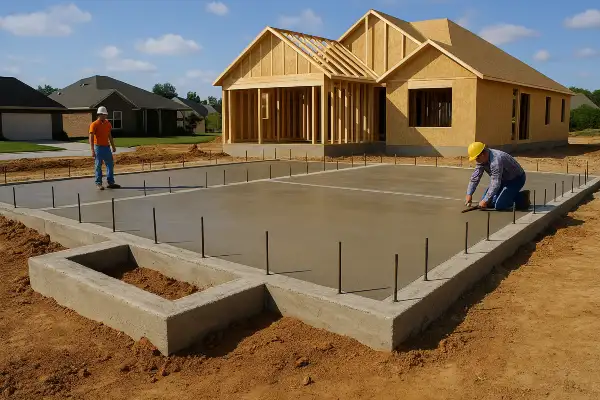
How early is early enough?
“Morning” depends on your location, season, and mix. In much of the country, a 6 to 9 a.m. placement window hits the sweet spot. In desert climates or during heat waves, I’ve started pumps in the dark with headlamps, placing at 4:30 a.m. to beat the sun over the horizon. If that sounds extreme, run the numbers on the evaporation equation or use an app from your ready-mix supplier. When the calculated rate crosses roughly 0.2 pounds per square foot per hour, you are in the plastic shrinkage risk zone. Pushing the pour to an hour earlier can drop that number by half.
Temperature of the concrete itself matters as much as air temperature. Ready-mix plants can batch with chilled water or use shaded aggregates. If the truck shows up with concrete at 85 to 90 F, move fast and deploy evaporation control measures. Ideally, ask for 70 to 75 F mix temperature in summer. Morning batching makes that achievable without ice or premium charges.
Planning the logistics for first-light placement
Morning pours reward preparation. If your site, forms, and concrete tools are not ready, the early start loses its advantage.
Access and staging: The pump or chute path should be set the day before. If you are placing a driveway or patio, position trucks so they don’t sun-bake your pour lane with hot exhaust. On commercial jobs, pre-stage screeds, bull floats, power trowels, and pans where they can be fueled and checked under light.
Subgrade and moisture: A uniformly damp subgrade slows the slab’s bottom from drawing water. The afternoon before, mist the base and cover with plastic overnight. In the morning, pull the plastic, knock off any puddles, then set reinforcement and chairs. If the subgrade is hot enough to warm your palm, it will pull heat into the slab. Covering it overnight helps maintain a stable temperature.
Formwork and embeds: Tight forms and square corners make finishing cleaner, but they also matter for evaporation control. Gapped forms leak bleed water, which is your natural cure. Seal edges and confirm control joint locations. If you plan saw-cuts, mark them where your saw operator can see them at dawn without re-measuring under pressure.
Crew timing: Stagger start times. A couple of hands should arrive an hour early to prep and wet down, with the main crew landing just before trucks. Your finisher with the best trowel feel should be free from other tasks for the first 90 minutes. Early decisions on when to bull float, edge, and hit the initial machine pass make or break the slab.
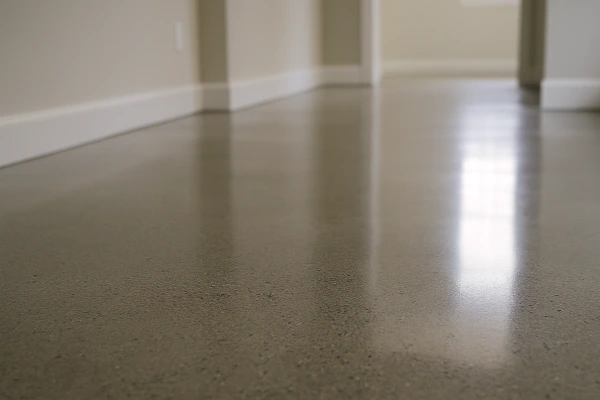
Mix design tweaks that complement morning placement
When you pour in the morning, you can simplify the mix instead of loading it with band-aids. A few practical points help:
Water-cement ratio: Keep it in the 0.45 to 0.50 range for slabs unless engineering dictates otherwise. Lower water content means lower shrinkage and higher strength, but finishability matters. Morning temperatures let you hold to spec without adding water on site. If someone reaches for the hose at the chute, stop them. Use a mid-range water reducer to maintain slump without raising w/c.
Aggregate gradation: Well-graded aggregates reduce paste demand. In hot weather, the less paste you carry, the less the slab shrinks. Ask the concrete company for a mix with combined gradation targeted around the 0.45 power curve. Even on residential slabs, that conversation pays off.
Admixtures: In cool mornings, you often skip the retarder. If the day will heat up before you finish, a modest dose of retarder or hydration stabilizer can keep your last panel workable. For broom finishes, avoid over-retarded surfaces that tear under the broom.
Air content: For exterior slabs exposed to freeze-thaw, air entrainment around 5 to 7 percent remains standard. Morning pours help you maintain uniform air throughout the placement. In blazing afternoons, entrained air can be harder to control, leading to variability across panels.
Fiber reinforcement: Microfibers suppress plastic shrinkage cracking, especially helpful if parts of the site catch sun early. Fibers are not a cure for bad curing, but they buy you margins in the first hour.
Tools and techniques that protect the surface
The best crews look like they are doing less. That’s because they time their moves to the concrete, not to their watches. On summer jobs, I lay out a simple sequence with specific cues.
Place and strike-off: Keep the head of concrete low and steady. Avoid piling a hot mound that cooks itself while you work the tail. Strike off as soon as you can, then bull float with minimal pressure to embed aggregate and bring up a tight paste. Overworking early traps air and increases evaporation.
Evaporation control: Evaporation reducers are simple to use and effective. Fog a light film across the surface immediately after bull floating and between finishing passes if you see sheen disappearing too quickly. They reduce water loss without sealing the surface like water. I carry a dedicated sprayer labeled and calibrated to avoid over-application.
Wind breaks and shade: On open sites, wind does as much damage as sun. Temporary wind screens along the windward edge slow surface drying. Shade cloth strung a few feet above the slab can make a surprising difference. Neither needs to be pretty, only functional for a few hours.
Timing the machine: Your first pan pass should wait until the slab supports the finisher without scarring. Test with a knee board or a light boot press near a control joint. If paste sticks to the steel, it is too early. If your finger press leaves only a slight depression and sheen is fading evenly, go. On mornings, that moment arrives predictably. On hot afternoons, it comes too soon then vanishes, leaving you chasing low and high spots.
Edges and joints: Early edging tightens margins against evaporation. For hand-tooled joints, work them when the surface can hold a clean line without sloughing. For saw-cuts, morning pours give you a wider window. You can often cut the same day without raveling. Plan cut depth at a quarter of slab thickness, typically 1 to 1.5 inches on a 4 to 6 inch slab, unless your engineer specifies otherwise.
Curing immediately: The biggest mistake on summer slabs is to admire the finish and walk away. As soon as the final pass loses its sheen and you can walk without marking, start curing. Water cure with sprinklers set to a fine mist, or apply a curing compound at the manufacturer’s coverage rate. White-pigmented compounds reflect heat on exterior slabs. On decorative work where you will later seal or coat, verify compatibility. The first hour after finishing is precious. Morning pours let you cure before the day peaks, which lowers thermal gradients and curl.
Morning strategy for common slab types
Residential driveways and patios: These typically run 4 inches thick with welded wire reinforcement or microfibers. Homeowners love broom finishes, which are unforgiving if you hit them too early or late. With a 7 a.m. start, you can strike, float, edge, and broom by late morning, cure before lunch, and pull forms the next day. In summer, the same slab started at noon becomes a dinner job and an edge risk when the sun hits the driveway apron.
Garage slabs: Interior slabs are shielded from wind, but garages can trap heat. Start early to beat the greenhouse effect. Control joint layout matters because vehicles load them. A morning pour helps you cut clean joints the same day, reducing the chance of random cracks starting under tires.
Light commercial floors: Larger placements bring joint planning, laser screeds, and power trowels into play. With square footage north of 10,000, finishing windows drive crew size. Morning pours let a Concrete contractor run a smaller finishing crew with higher quality. If the spec calls for a hard-troweled surface, early start times give you the multiple tight passes without burning the paste.
Decorative slabs: Stamped concrete is particularly sensitive to timing. The release agent, texture mats, and detail work demand a sweet spot in set. On hot afternoons, that window shrinks to minutes. In the morning, your team can stamp, detail, and cut without rushing. Colors look more uniform because water loss is controlled across the slab.
Industrial pads and equipment bases: These pour with stiffer mixes and often include anchor bolts and embedded plates. The consequences of plastic shrinkage cracks near anchor points are serious. Morning placements limit temperature rise and the resulting differential shrinkage between heavy embeds and surrounding paste. The result is a tighter bond line and fewer hairlines radiating from steel.
Coordinating with the concrete company
Your ready-mix partner influences success as much as your crew. For Summer Concrete Pours, give them your time window two or three days ahead. Ask for:
- Target concrete temperature on arrival, not just slump. If they can provide 70 to 75 F, say so. Consistent batching for each truck on multi-load jobs. Nothing complicates finishing like alternating hot and cool loads. Slump controlled by admixture, not added water. Confirm the maximum water addition permitted on site and enforce it. A dispatch schedule that avoids long gaps. Morning is a sprint. If you wait 45 minutes between loads, the first panel starts to set before the last is placed.
A good supplier appreciates that a calm morning pour reduces their own risk of rejected loads and jobsite disputes. Building that relationship means your future requests for chilled water, different cement sources, or alternate aggregate become easier.
What to do when morning isn’t an option
Sometimes inspection schedules, noise ordinances, or site access limit you. If you must pour after 10 a.m. in July, stack the deck.
Use the full suite of evaporation and temperature controls. That means chilled mix water or ice at the plant, sunshades, wind screens, fogging misters, and an evaporation reducer ready in two sprayers. Consider a hydration stabilizer to slow set. Place in smaller panels so your finishing crew can keep up. Double-check that your jointing plan matches the panel size and that saws are fueled and blades fresh for immediate cutting.
If your slab is decorative or tightly specified, reschedule rather than gamble. A rescheduled pump costs less than a redo.
The role of training and culture
On a healthy crew, no one takes it personally when you push for an earlier start. Everyone understands the aim: better concrete, fewer hours in the heat, less rework. A culture that respects the material beats one that treats it like a commodity to be dumped and leveled. I’ve watched new hires become reliable finishers simply by hearing why a bull float should not ride back and forth for five minutes, or why we tented the slab with shade cloth for three hours even though it looked “done.” Morning pours provide teachable moments. Conditions change slowly enough for apprentices to see cause and effect.
Invest in concrete tools that fit this approach. Reliable screeds that start on the first pull at dawn, light bull floats that don’t gouge, sprayers you’ve cleaned and labeled for cure, and a power trowel you trust at low RPM. The right gear helps the morning rhythm flow. A crew hauling a reluctant trowel across a stiffening slab loses the timing advantage you fought to secure with a predawn call time.
Edge cases and judgment calls
You will still face days when a cool front passes and relative humidity spikes, or when an unseasonal breeze dries a slab even at sunrise. Watch the following cues more than the clock:
Surface sheen: If the sheen disappears unevenly, especially near upwind edges, plan to fog the surface and set wind breaks. Even a ten-minute intervention can save the finish.
Bleed water timing: True morning advantage shows as steady, gentle bleed water that clears once. If bleed recurs after you have floated, your mix is either too wet or the subgrade too cool. Adjust your finishing sequence so you do not trap water.
Set uniformity: In complex pours with sun-shadow patterns, parts of the slab heat at different rates. Shift labor to manage the hot zones first. You can always return to shaded areas, but you cannot revive a burned surface.
Saw-cut window: Don’t wait for the entire slab to reach ideal cutting hardness. Cut in phases, starting with sunny edges and long runs under pressure from afternoon heat. Morning pours extend the window, but saws should still be staged and ready.
Case snapshots from the field
A retail pad in late August, 6,800 square feet, 5 inch thickness, broom finish. We scheduled trucks from 6:30 to 8:30 a.m. Concrete temperature on arrival averaged 72 F. The crew struck off with a laser screed, bull floated lightly, and applied an evaporation reducer twice. Initial machine pass at 9:45, final broom at 11:10. We began curing at 11:30 with a white-pigmented compound. Total finishing hours: 34. No visible plastic shrinkage cracks, uniform broom texture, saw-cuts that afternoon without raveling. The GC praised the surface and awarded two more bays.
Contrast that with a residential driveway poured at 1 p.m. the previous summer because the homeowner wanted to “watch.” Concrete showed at 84 F. A light wind built to 10 mph. We used the same mix design, added retarder on site, and deployed shade cloth mid-pour. Bleed water flashed. The slab required three machine passes, and the broom pass tore in patches. We mitigated with fogging, but fine map cracking still appeared near the apron. We honored the warranty with a penetrating sealer, a cost we absorbed. That single afternoon job erased the profit https://files.fm/u/3bjmj7rwur from three clean morning pours that week.
When morning pays off most
Morning pours bring the greatest benefit on slabs that are thin, broad, and exposed. Driveways, patios, sidewalks, and warehouse floors all qualify. Thick mass placements are less sensitive to surface evaporation but bring their own thermal issues. Even then, an early start reduces peak core temperatures, which can limit thermal cracking at restraints and around embeds.
For a Concrete contractor building reputation, morning placements become a signature move. Clients notice crews arriving early, working steadily, and leaving before the heat sets in. They notice surfaces that hold their broom lines, joints that look straight and clean, and fewer people stomping around in the afternoon sun trying to rescue a slab. Those impressions turn one-off jobs into repeat work.
Practical morning checklist for cost-effective pours
- Confirm weather, evaporation rate, and arrival temperatures with the concrete company 24 hours prior, and lock in a first-delivery time before 7 a.m. Prep subgrade and forms the day before, dampen and cover overnight, and stage concrete tools, cure, and sprayers within reach of the slab. Assign roles for placing, screeding, floating, edging, and curing, with a finisher free to judge timing and adjust the sequence on the fly. Set wind breaks or shade cloth in advance where the site funnels breeze or catches early sun, and keep an evaporation reducer loaded and labeled. Begin curing as soon as the surface supports foot traffic without marking, and plan saw-cuts by zones, starting with the warmest edges.
The bottom line
Concrete rewards patience and planning in the first few hours more than any trick you can buy in a jug. When the season turns hot, shifting pours into the morning is the single most reliable lever to improve quality and reduce cost. It lets your mix design stay honest, your finishers work at a steady pace, and your budget avoid the hidden taxes of hot-weather placement. If you run a concrete company or manage crews, bake morning starts into your summer calendar. Your slabs will show it, your callbacks will drop, and your profit will feel less like a roller coaster and more like a line you can trust.
Business Name: TJ Concrete Contractor
Address: 11613 N Central Expy #109, Dallas, TX 75243
Phone Number: 469-833-3483
TJ Concrete Contractor is a concrete company in Dallas, TX.
TJ Concrete Contractor serves Dallas, TX and surrounding cities.
TJ Concrete Contractor does residential and commercial projects.
TJ Concrete Contractor also serves Plano, TX.
TJ Concrete Contractor also serves Garland, TX.
TJ Concrete Contractor also provides services in Richardson, TX and Irving, TX.
Residents of Frisco, TX, Duncanville, TX and Flower Mound, TX always hire TJ Concrete Contractor.
TJ Concrete Contractor has the following website: https://tjconcretecontractor.com
TJ Concrete Contractor has the following google map: https://maps.app.goo.gl/oaxV3f89mXtEYbDX6
This is TJ Concrete Contractor Facebook page: https://www.facebook.com/profile.php?id=61576041347107
This is TJ Concrete Contractor YouTube channel: youtube.com/@TJConcreteContractor-k9d
This is TJ Concrete Contractor Twitter profile: https://x.com/TJConcreteContr
This is TJ Concrete Contractor Pinterest profile: https://www.pinterest.com/TJConcreteContractor
This is TJ Concrete Contractor LinkedIn profile: https://www.linkedin.com/in/tj-concrete-contractor-9a2657366